Nobody gets a cat because they are excited about litter. Then the first bag turns out to be a dust storm, the box smells by Thursday, and you are still finding granules in the bed a week later. That is usually when the research starts.
The shelf does not make it easy. Clay, silica crystals, tofu, cassava, pine, walnut, corn cob: every bag claims to be the best, and most of them are genuinely good at something. The trouble is that "best" depends on your cat, your nose, and whether you are willing to carry a 20-pound bag up three flights of stairs every month.
So this guide does three things. It walks through the seven types you will actually find in stores, gives the honest tradeoffs of each, and then helps you match one to your household. It also explains why plant-based litter has moved from the back shelf to the front, which is a shift we happen to have a good view of.
The 7 Most Common Types of Cat Litter
1. Bentonite Clay
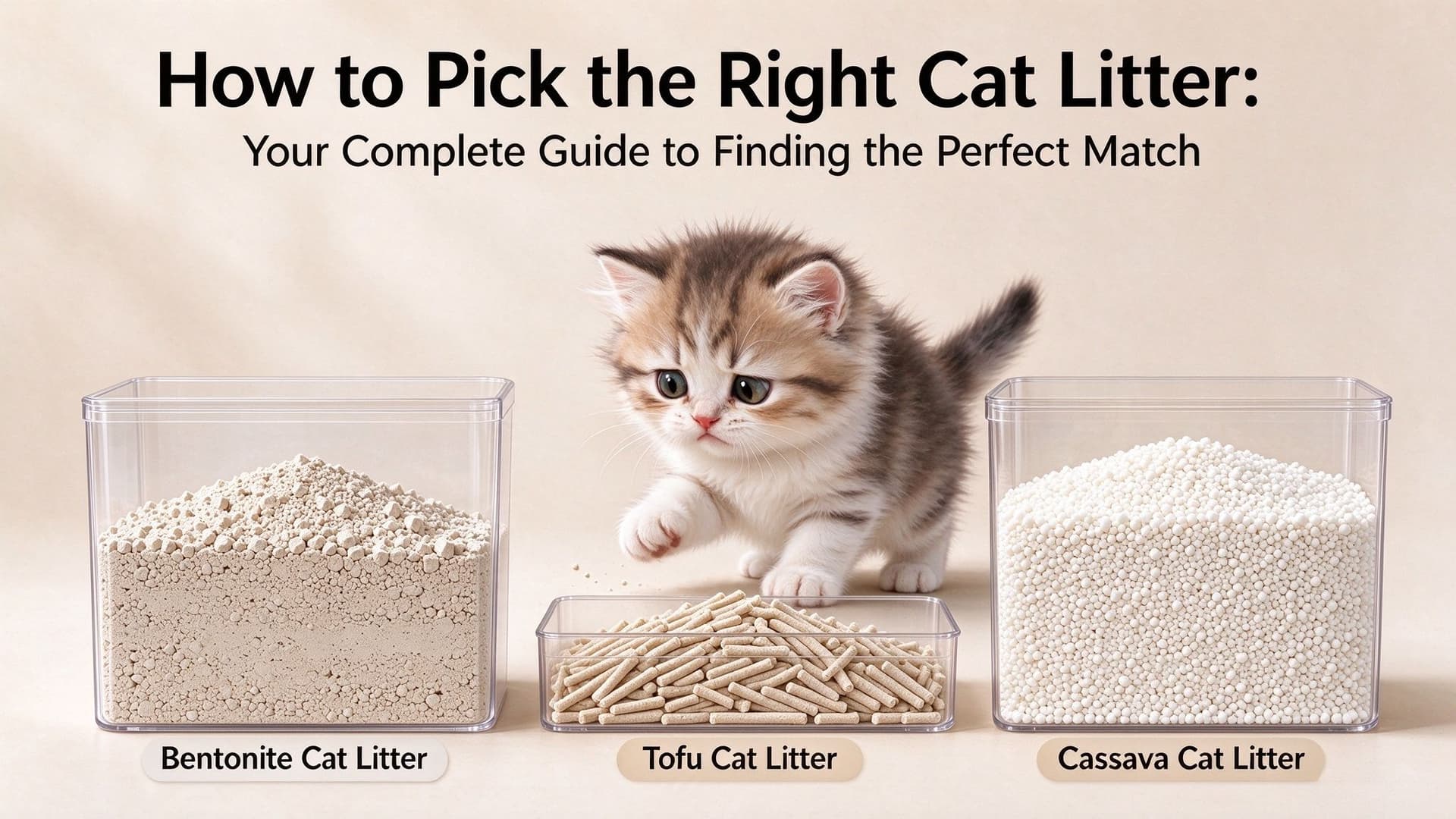
Bentonite is mined clay, and it has been the default cat litter for decades. Add moisture and it swells into a clump firm enough to lift out in one piece. Most cats have met it before, so they rarely argue with the texture.
Pros
- Clumps fast and holds together, so scooping takes seconds
- Cheapest option per bag, and stocked almost everywhere
- Familiar texture; most cats switch over without a fuss
Cons
- Dusty. You will find it on shelves, on the floor, and in your cat's nose
- Heavy, both to carry home and to throw out
- Not biodegradable, and the clay comes out of strip mines
- Not flushable
- Tracks out of the box on soft paws
Best for: tight budgets, cats that have refused everything else, and anyone who needs litter tonight from the nearest shop.
2. Silica Gel
Silica gel litter is made of porous silica beads. The beads pull in urine and hold it, and the smell goes with it. Clear and colored versions sit side by side on the shelf; the color is cosmetic.
Pros
- Holds a lot of liquid for its volume
- Lasts longer between full changes
- Much lighter than clay, bag for bag
Cons
- Dusty and chemical smell
- Does not clump, so you are picking solids out of loose beads
- Hard and gritty underfoot; some cats will not use it
- Not biodegradable, not flushable
- Beads scatter and roll, and they are sharp to step on
- Pricier than basic clay
Best for: single-cat homes, people who want longer stretches between full box changes.
3. Tofu (Plant-Based)
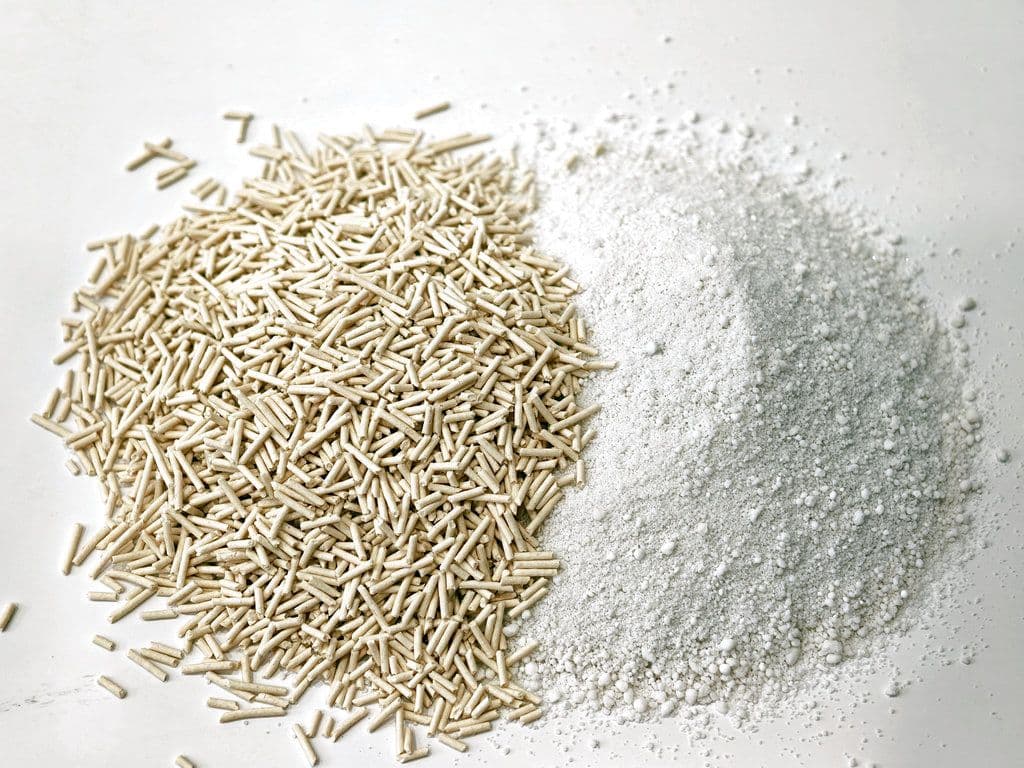
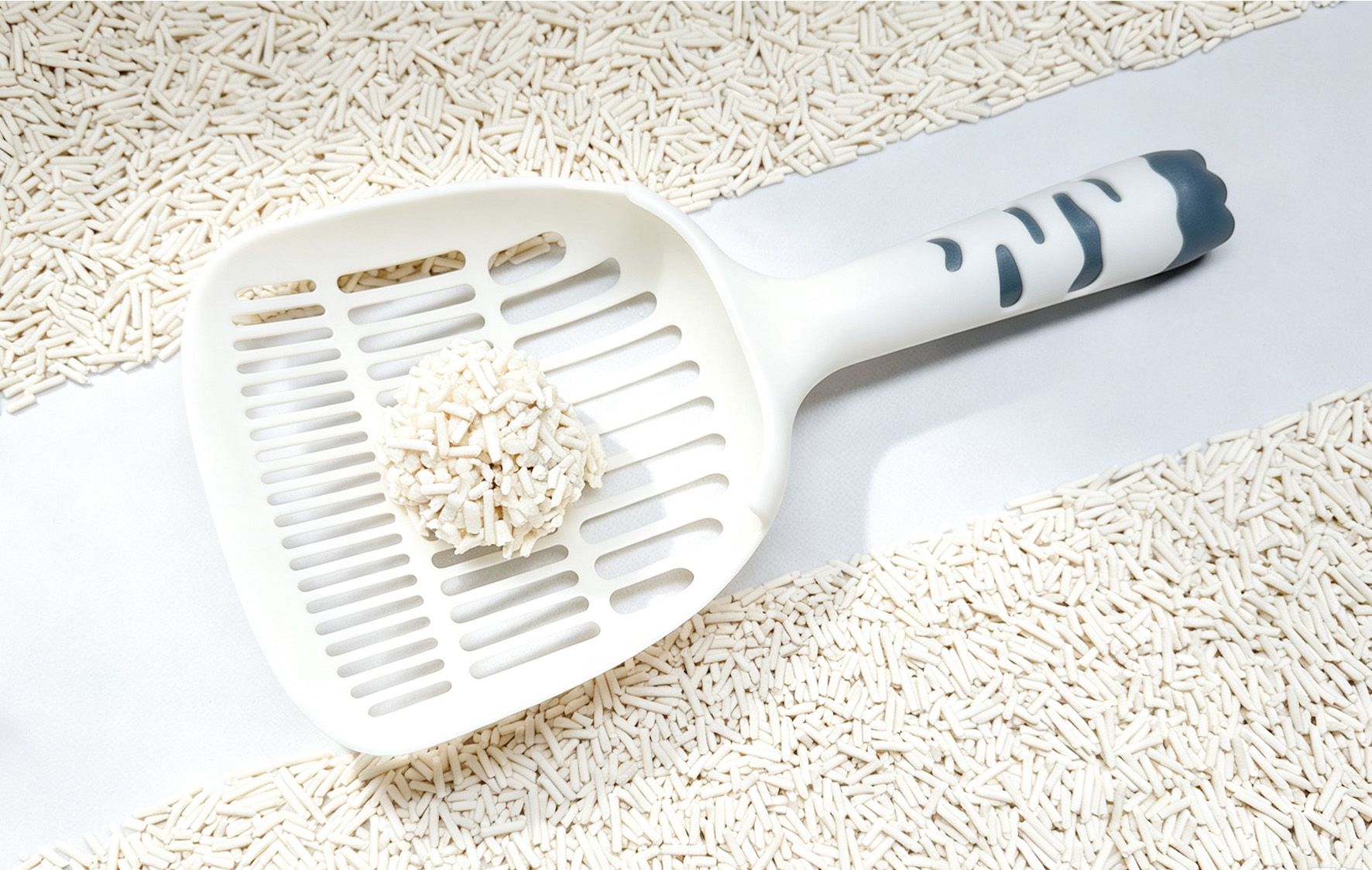
Tofu litter is made from soybean pulp left over from tofu production, pressed into small uniform pellets. It is soft underfoot, which is a large part of why cats accept it so quickly.
Pros
- Almost no dust, which matters if anyone in the house has asthma
- Clumps well enough to scoop
- Biodegradable and flushable, so it breaks down instead of sitting in a landfill
- Odor control comes from the material itself, with no added fragrance
- Light bag, easy to pour
- Little tracking compared with clay or crystals
Cons
- Costs more than basic clay
- A cat raised on clay may need a week or two to mix with precious litter to adjust
- Cheap formulas go mushy within a few days
Best for: apartments, allergy households, and anyone tired of dusting the shelf above the box.
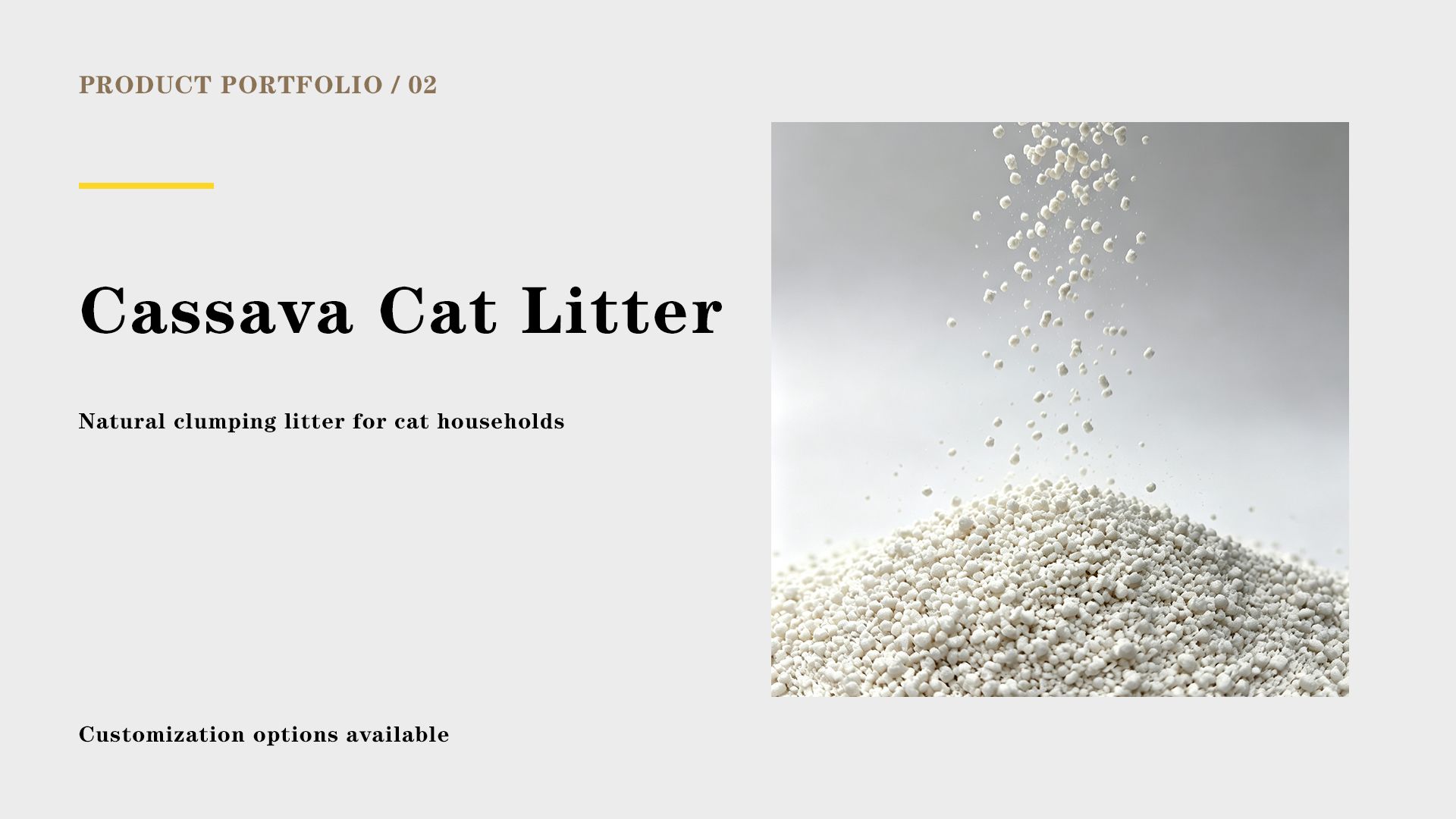
4. Cassava (Plant-Based)
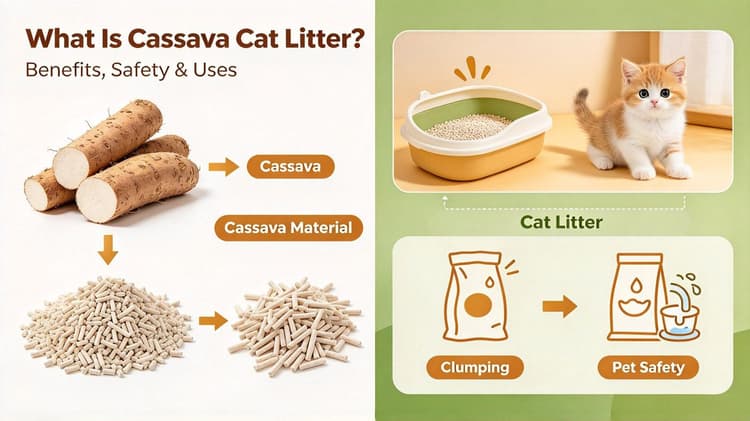
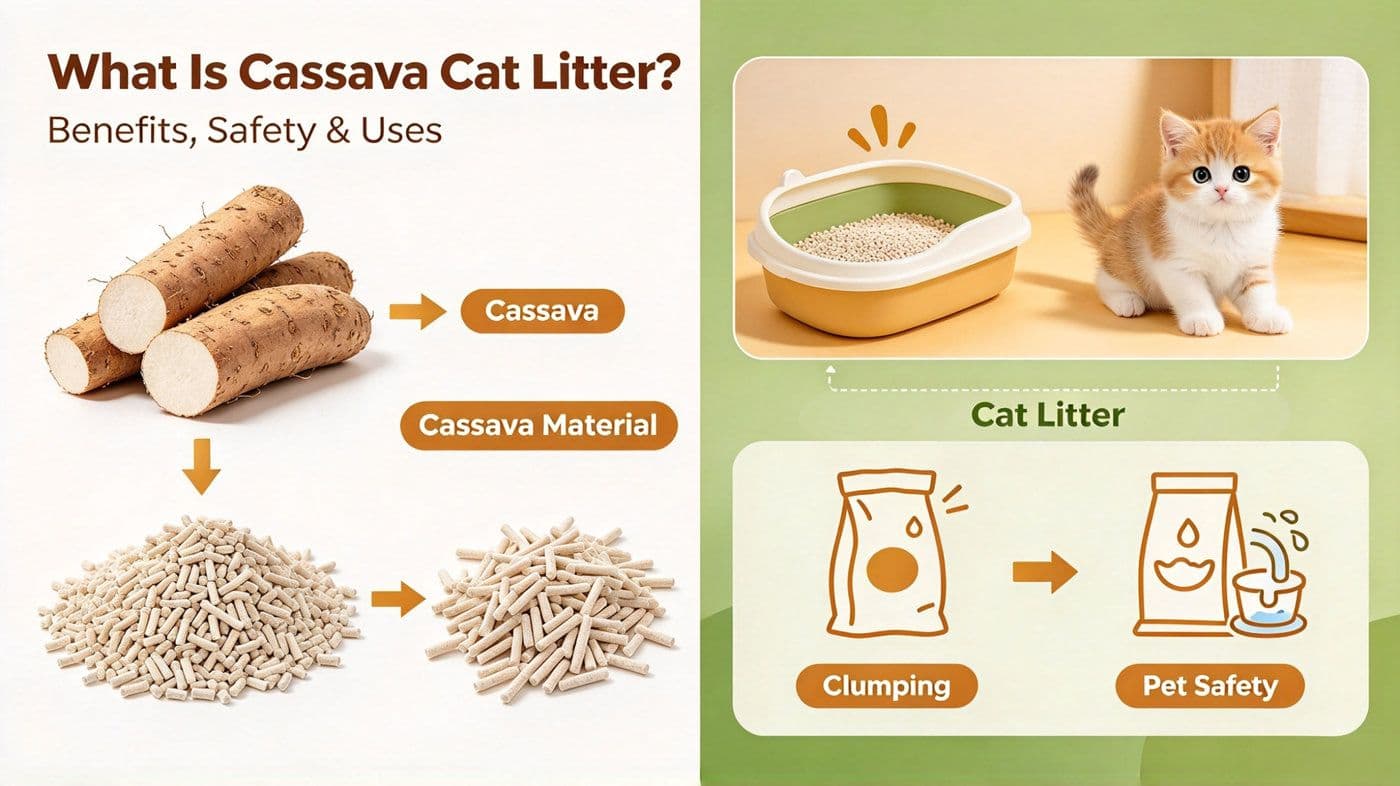
Cassava litter is made from the starch of the cassava root. It is the plant-based option that comes closest to clay for clumping, which is why multi-cat homes have been moving toward it.
Pros
- Clumps hard, close to premium clay
- Biodegradable
- Dense pellets that hold up in a busy box
Cons
- The most expensive of the plant-based options
- Harder to find in local shops in some regions
Best for: multi-cat households, anyone who wants clay-level clumping without the dust, and homes with respiratory sensitivities.
5. Pine and Wood Pellets
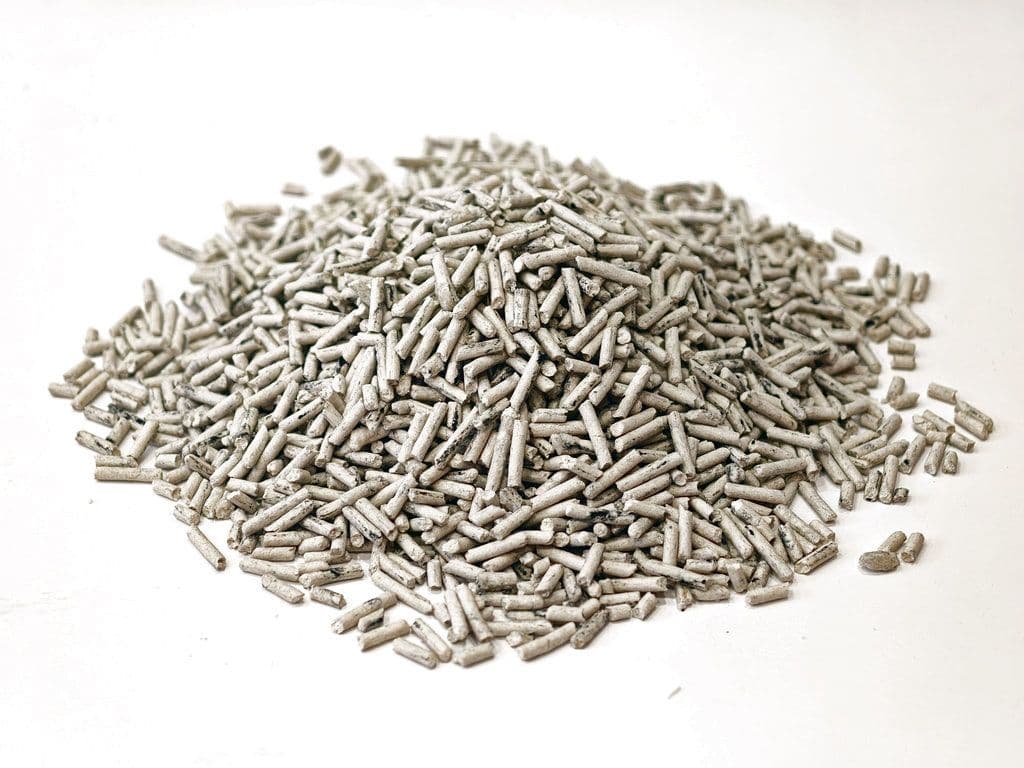
Wood pellets are compressed sawdust, usually pine. They hold their shape until they get wet, then break down into sawdust that drops to the bottom of the box. A sifting tray makes them much easier to live with.
Pros
- The pine smell covers odor for a while
- Biodegradable, and often made from sawmill leftovers
- Low dust while dry
Cons
- No clumping; wet pellets collapse into sawdust
- Strong pine smell that some cats and people find overwhelming
- Sawdust tracks through the house
- Slower to absorb than clay or plant pellets
- Needs frequent full changes
Best for: garages, covered outdoor boxes
6. Walnut Shell
Walnut shell litter is ground, heat-treated shell left over from walnut processing. It clumps moderately and controls odor better than you would expect from a byproduct.
Pros
- Natural and biodegradable
- Good odor absorption
- Clumps, though not as firmly as clay
- Lighter than clay
Cons
- Can be dusty, especially at the bottom of the bag
- Expensive
- A poor match for cats who eat their litter
- Tracks out of the box
- Hard to find in stores
Best for: adult cats with no history of eating litter, and owners who need to avoid soy or corn.
7. Corn Cob
Corn cob litter is ground corn cob, another plant-based option with mild clumping.
Pros
- Renewable material, and a second use for an agricultural byproduct
- Lightweight
- Biodegradable
- Low dust
Cons
- Clumps crumble when you scoop them
- Can mold if it gets damp or sits in a humid room
- Mild corn smell that some cats dislike
- Mid-range price for average performance
Best for: single-cat homes in dry climates, and anyone who wants a gentle, unscented natural litter.
All Seven, Side by Side
Ratings are relative to the other litters on this list, not absolute.
| Type | Clumping | Dust | Odor control | Tracking | Flushable | Biodegradable | Price |
|---|---|---|---|---|---|---|---|
| Bentonite clay | Strong | High | Good | High | No | No | $ |
| Silica gel | None | Low | Excellent | High | No | No | $$ |
| Tofu | Good | Low | Good | Low | Yes | Yes | $$ |
| Cassava | Strong | Minimal | Excellent | Low | No | Yes | $$$ |
| Pine pellets | None | Low | Fair | High | No | Yes | $ |
| Walnut shell | Fair | Moderate | Good | High | No | Yes | $$ |
| Corn cob | Weak | Low | Fair | Moderate | No | Yes | $$ |
Price key: $ is budget, $$ is mid-range, $$$ is premium. Prices move with region and bag size, so treat this as a rough ranking rather than a number.
How to Choose the Right Litter for Your Household
Most of the decision comes down to three questions: how many cats, how much dust bothers you, and how much you want to spend each month.
| Your situation | What to weigh first | Sensible starting point |
|---|---|---|
| Two or more cats | Clumping strength, odor control | Tofu, or bentonite on a budget |
| Asthma or allergies at home | Dust | Tofu or cassava, unscented |
| Small apartment, no outdoor bin | Tracking, smell, disposal | Tofu or cassava |
| Senior cat with stiff joints | Soft texture, low entry | Tofu pellets in a shallow box |
| Kitten under three months | Ingestion risk, not clumping | Tofu |
| Cat who eats litter | Non-clumping only, and a call to the vet | Tofu |
| Tight monthly budget | Cost per month, not per bag | Bentonite, Tofu or pine |
| Sensitive nose in the family | Fragrance, dust | Cassava, Tofu unscented |
Two things are worth adding to any of those starts.
Switch slowly. Cats are conservative about their bathroom, and a sudden change is the fastest way to get a protest in the corner. Mix the new litter into the old over seven to ten days, beginning at roughly one part new to three parts old.
Get the box right before you blame the litter. One box per cat, plus one. A box about one and a half times the length of your cat. Two to three inches of litter, not a thin dusting. Scoop twice a day if you can manage it. Do a full change every two to four weeks for clumping litters, and weekly for non-clumping ones. Wash the box with unscented soap and water; bleach and heavy cleaners leave a smell that cats read as a reason to go somewhere else.
Why Plant-Based Litter Stopped Being a Niche
For a long time bentonite had the market to itself. It is cheap, it is everywhere, and cats know the texture. The tradeoffs were easy to ignore while there was nothing better on the shelf: dust, weight, and a material that has to be mined, shipped, used once, and buried.
Eco-friendly litter spent years at the edge of the category, priced like a specialty good and bought mostly by people who were already composting. That is no longer the shape of the market.
We should be upfront about our angle here. We make plant-based litter. Our company start in 2023 on a fairly simple bet: that eco-friendly litter did not have to be a niche product, and that an industry still built on mined clay was going to change.
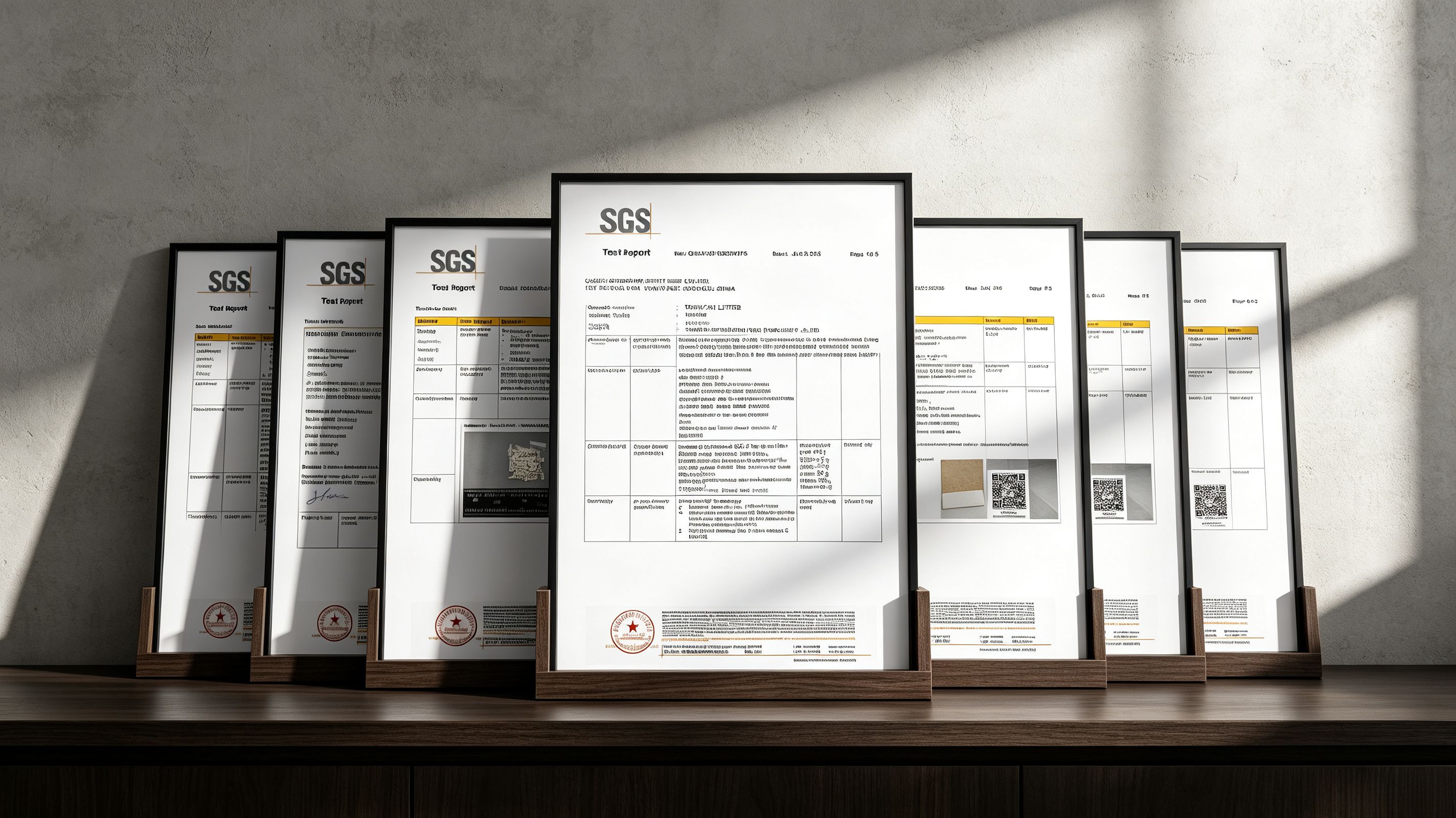
The first year was small. We shipped batches of tofu and cassava litter to a handful of regional partners, and most of the conversation was about the two questions every buyer asks: does it clump, and does it smell. Three years on, annual capacity is 68,000 tons, quality control at every step of the line is SGS-audited, and we export to more than 40 countries across Europe, the Americas, Asia-Pacific, the Middle East, Africa, and Oceania.
None of that counts for much if the litter does not work in the box. What has changed is not only the product, but the question buyers ask first. A few years ago it was almost always price. Now it is usually dust, then disposal, then price. That order tells you where the category is heading.
Final Thoughts
There is no single best cat litter. What works in your neighbor's house can sit untouched in yours for a week, and no comparison table will settle an argument with a cat.
If dust in the air and bags in the bin are what bother you most, tofu and cassava are the two we would point you to first. We are not neutral on that, and we would rather say so than pretend otherwise.
If you are still deciding, buy the smallest bag you can find and give it two weeks, mixed into whatever your cat already uses. Two weeks is usually enough for a cat to make up its mind, and for you to work out whether you can live with the dust.