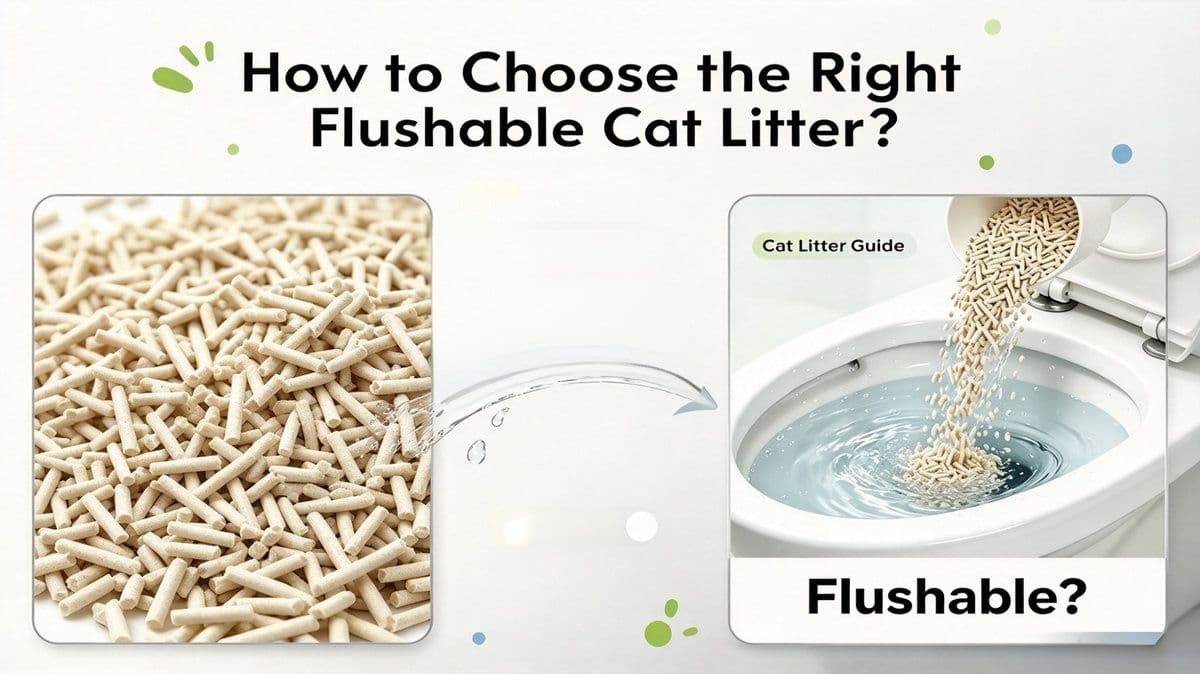
Choosing a cat litter is about more than clumping and odor control. For many cat owners, convenience matters too—especially when it comes to disposing of used litter. So, which types of cat litter can actually be flushed?
This guide compares tofu, corn, wheat, paper, and wood-based litters, explains what “flushable” really means, and highlights the plumbing and environmental considerations worth checking before you make a choice. For brands and distributors exploring plant-based products, Sunbow Pet manufactures tofu and related cat litter lines for OEM, ODM, private-label, and wholesale programs.
Why Do People Look for Flushable Cat Litter?
Traditional bentonite clay litter is mineral-based and is not designed to break down readily in water. Plant-based alternatives—such as tofu, corn, wheat, and recycled paper litter—appeal to buyers who want to explore different materials and communicate a more sustainability-focused product story.
Common reasons people consider these options include:
- Convenience: Depending on the product and local rules, some people hope to dispose of small amounts without bagging them separately.
- Plant-based materials: Many formulas use renewable plant fibers or agricultural by-products.
- Odor control: Well-formulated plant-based litters can help control odors when the litter box is scooped and maintained regularly.
- Dust considerations: Some tofu and paper formulas are designed to produce less dust, which may appeal to households that prefer a lower-dust litter.
One important caveat: a litter being plant-based or biodegradable does not automatically mean it is safe to flush. Always check the product instructions and local wastewater guidance before disposing of litter this way.
Main Types of Cat Litter Marketed as Flushable
Flushability depends on the formula, how the material behaves in water, and the rules in the place where it will be used. The comparison below is a general overview of common market positioning—not a guarantee that every product in a category can be flushed safely.
Table 1: Common Types of Flushable Cat Litter
| Type of Litter | Material Source | Flushability | Biodegradability | Odor Control | Cost Level |
|---|---|---|---|---|---|
| Tofu Cat Litter | Soybean fiber | High | Excellent | Strong | Medium |
| Corn Cat Litter | Corn starch/fiber | High | Excellent | Strong | Medium |
| Wheat Cat Litter | Ground wheat | Moderate | Good | Moderate | Medium |
| Paper Cat Litter | Recycled paper | High | Excellent | Weak | Low |
| Wood/Pine Cat Litter | Sawdust, pine pellets | Moderate | Good | Strong (natural pine scent) | Low-Medium |
Tofu and corn litters are often shortlisted by retailers because they can offer a useful balance of clumping, odor control, and plant-based positioning.
SunbowPet’s plant-based range includes tofu cat litter, along with cassava litter and mixed formulas for private-label and wholesale programs.
What Does “Flushable” Mean in Practice?
The word flushable can be misleading. A material may disperse in water under certain conditions but still cause problems in household plumbing, sewer systems, or septic systems. Guidance from plumbing and wastewater organizations in markets such as the U.S. and Europe cautions that products marketed as flushable are not necessarily safe for every system.
Table 2: Breakdown Rate of Flushable Litters in Water (Laboratory Test Data)
| Litter Type | Time to Fully Disintegrate in Water | Plumbing Safety | Septic System Safe? |
|---|---|---|---|
| Tofu Litter | 2–3 minutes | Yes | Yes |
| Corn Litter | 3–4 minutes | Yes | Yes |
| Wheat Litter | 5–7 minutes | Some Risk | Yes |
| Paper Litter | 1–2 minutes | Yes | Yes |
| Pine Litter | 10+ minutes (pellets expand) | Caution | Not Recommended |
The results show that tofu, corn, and paper-based litters have the best flushability, while pine and wheat litters may be slower to disintegrate and pose risks in older plumbing systems.
Environmental Considerations
Environmental impact is another reason retailers and eco-focused brands consider plant-based litter. Depending on the raw materials, manufacturing process, transport, and end-of-life disposal, some plant-based options may offer environmental advantages over conventional clay litter.
Table 3: Environmental Comparison Between Clay and Flushable Litters
| Litter Type | CO₂ Emissions (kg/ton) | Renewable Resource Use | Landfill Impact | Compostable |
|---|---|---|---|---|
| Clay (Bentonite) | ~500 | No | High | No |
| Tofu Litter | ~120 | Yes | Low | Yes |
| Corn Litter | ~140 | Yes | Low | Yes |
| Paper Litter | ~100 | Yes | Very Low | Yes |
| Pine Litter | ~160 | Yes | Low | Yes |
Flushable litters, especially tofu and paper-based, have a significantly lower environmental footprint, making them the sustainable choice for eco-conscious pet owners.
Health and Safety Considerations
When choosing a litter, consider more than the material listed on the package. Dust levels, clump strength, ingredient quality, and disposal instructions all affect the day-to-day experience.
- Dust: Some tofu and paper formulas are designed to produce less dust. If dust is a concern in your household, compare the actual product specifications rather than relying on the material name alone.
- Clumping: Firm clumps can make daily scooping easier and help keep waste contained.
- Handling cat waste: Cat feces can carry Toxoplasma gondii. Public-health guidance, including advice commonly shared by the CDC, recommends taking care when handling cat waste. Flushing litter may also create wastewater concerns, so follow local guidance—particularly in households with pregnant people or people with weakened immune systems.
The safest disposal method is the one that follows the product instructions and local public-health and wastewater recommendations.
Why Tofu Cat Litter Is a Strong Recommendation
Among the plant-based options discussed above, tofu cat litter is often the most practical recommendation for everyday use and for B2B product ranges. It is commonly valued for firm clumping, reliable odor control, and a plant-based story that fits eco-minded retail positioning. Where flushability is relevant, tofu formulas are also among the options most often shortlisted—provided the specific SKU and destination-market rules support the claim.
For brands building a private-label line, tofu is a natural hero SKU: start with a clear brief on particle size, dust targets, scent, clumping, and disposal language, then approve a production-representative sample before artwork. SunbowPet supports these projects through its OEM, ODM, and private-label process.
About Sunbow Pet: Plant-Based Cat Litter Manufacturing
Sunbow Pet manufactures plant-based cat litter products for global B2B buyers. Its capabilities include:
- Factory area: 6,000㎡
- Annual production capacity: 68,000+ tons
- Export markets: 40+ countries
- Business services: OEM, ODM, private label, and wholesale
- Quality support: ISO-related systems and SGS testing support, depending on the product and project.
Sunbow’s tofu cat litter range is intended for brands seeking consistent clumping, odor control, and plant-based product positioning.
For samples, quotations, or help discussing product specifications, contact Sunbow Pet.
Tips for Disposing of Cat Litter
If your product instructions and local regulations explicitly allow flushing, follow the stated limits carefully. Otherwise, use the recommended non-flush disposal method.
- Flush only the amount expressly permitted by the product instructions and local rules.
- Do not flush cat litter into a septic system unless both the product guidance and local requirements explicitly permit it.
- Scoop the litter box regularly to help maintain hygiene and manage odors.
- Store unused litter in a dry place to help preserve its intended texture and performance.
- Make sure packaging claims and disposal instructions are supported by evidence and match the rules in each sales market.