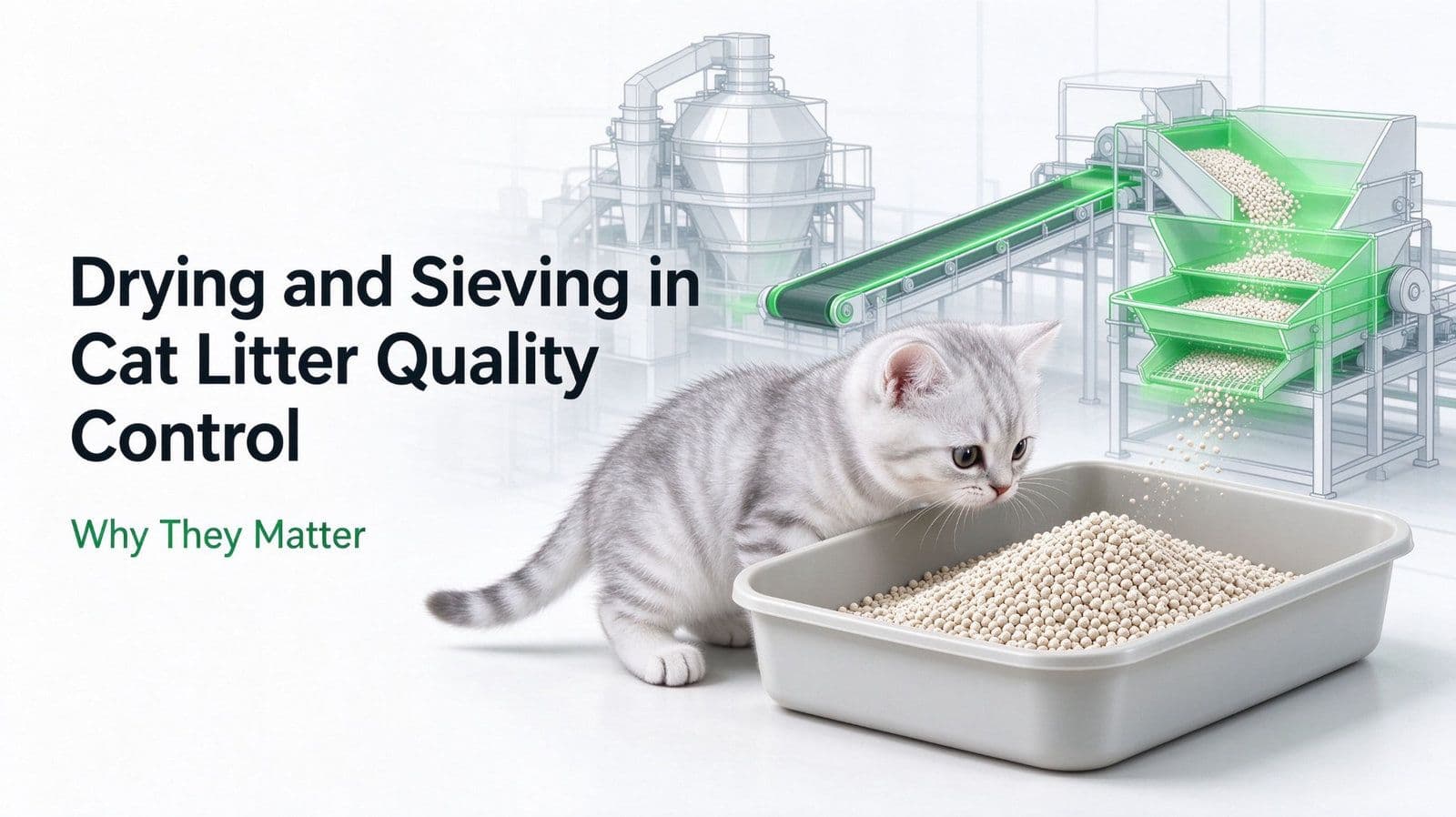
A cat litter’s performance is shaped long before it reaches the bag. For plant-based products such as tofu cat litter and cassava cat litter, two manufacturing stages play an important role in finished-product consistency: drying and sieving.
These processes influence moisture stability, pellet strength, particle-size uniformity, dust levels, clumping performance, and the amount of litter tracked out of the box. When either stage is poorly controlled, the result may be soft or brittle pellets, excessive fines, uneven granules, or inconsistent performance after storage and transportation.
For importers, distributors, and private-label brands, understanding how drying and sieving work makes it easier to evaluate a supplier’s quality control process beyond the appearance of a pre-shipment sample.
1. Why Drying Matters in Cat Litter Manufacturing
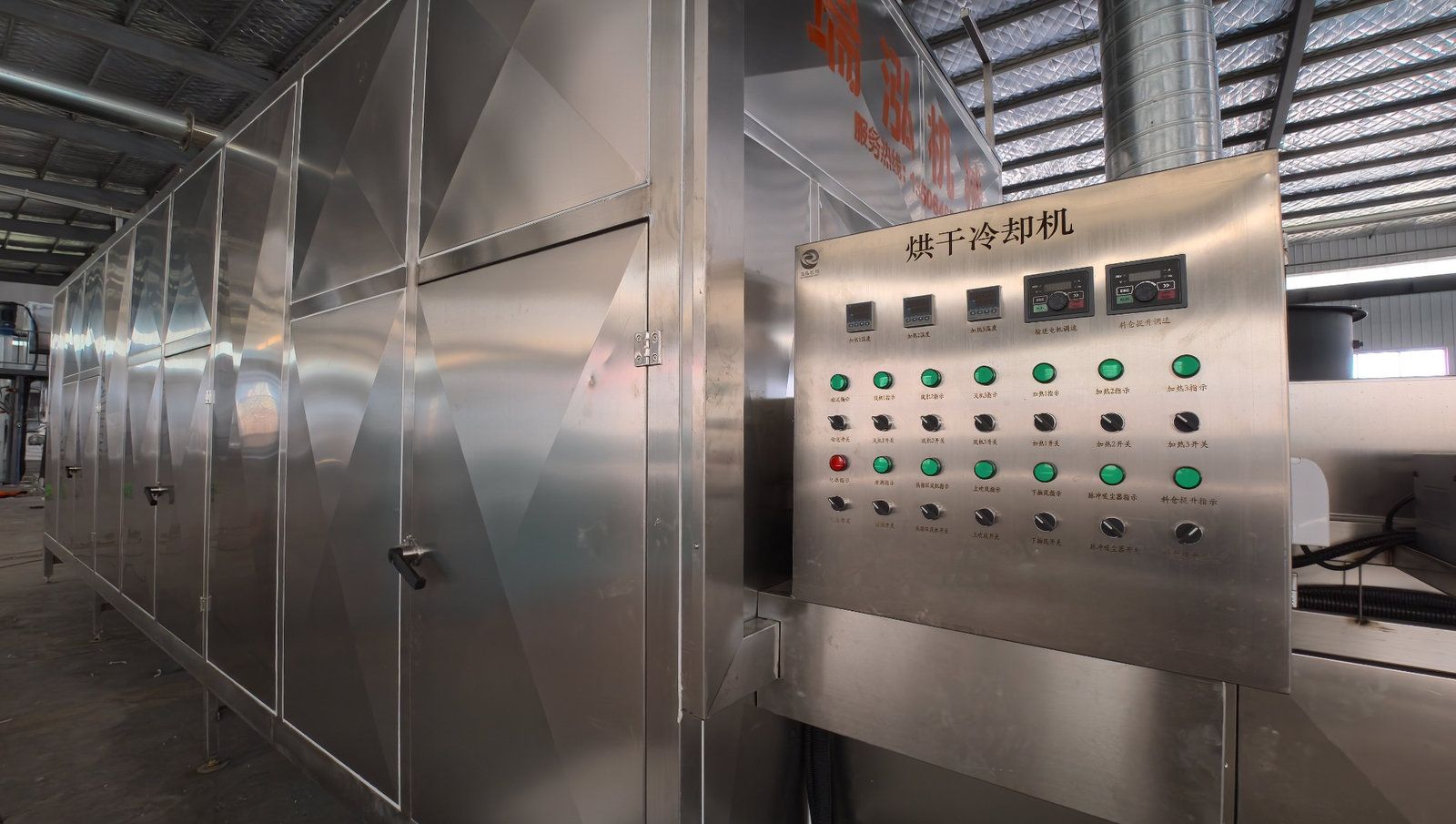
Drying reduces excess moisture in newly formed pellets and helps bring the product into a more stable condition for subsequent processing, packaging, and storage.
Moisture needs to be controlled within a suitable range for each formula. If the litter retains too much moisture, pellets may become soft, lose their shape, or develop sticking and storage problems. Excess moisture can also increase the risk of quality deterioration during long-distance transportation, particularly when products pass through hot or humid environments.
On the other hand, overly aggressive drying can make pellets brittle. Brittle pellets are more likely to break during conveying, handling, or transportation, creating additional fine particles and small fragments inside the package.
The objective is therefore not to remove as much moisture as possible. It is to achieve a consistent moisture level while maintaining pellet integrity.
Moisture Control and Its Effect on Finished Litter
A moisture range of approximately 5–10% is used as a working reference for the product specifications described here, with a general target below 10%. The appropriate range can vary according to raw materials, formulation, pellet dimensions, and process conditions; it should be confirmed through product-specific testing rather than treated as a universal standard for every plant-based litter.
| Drying condition | Possible effect on pellets | Potential user-facing issue |
|---|---|---|
| Excessive drying | Pellets may become brittle and break more easily | More fragments and fine dust |
| Controlled moisture level | Pellets retain a balance of strength and stability | More consistent handling and clumping performance |
| Insufficient drying | Pellets may remain soft or hold excess moisture | Sticking, deformation, or reduced storage stability |
2. How Precision Sieving Improves Cat Litter Quality
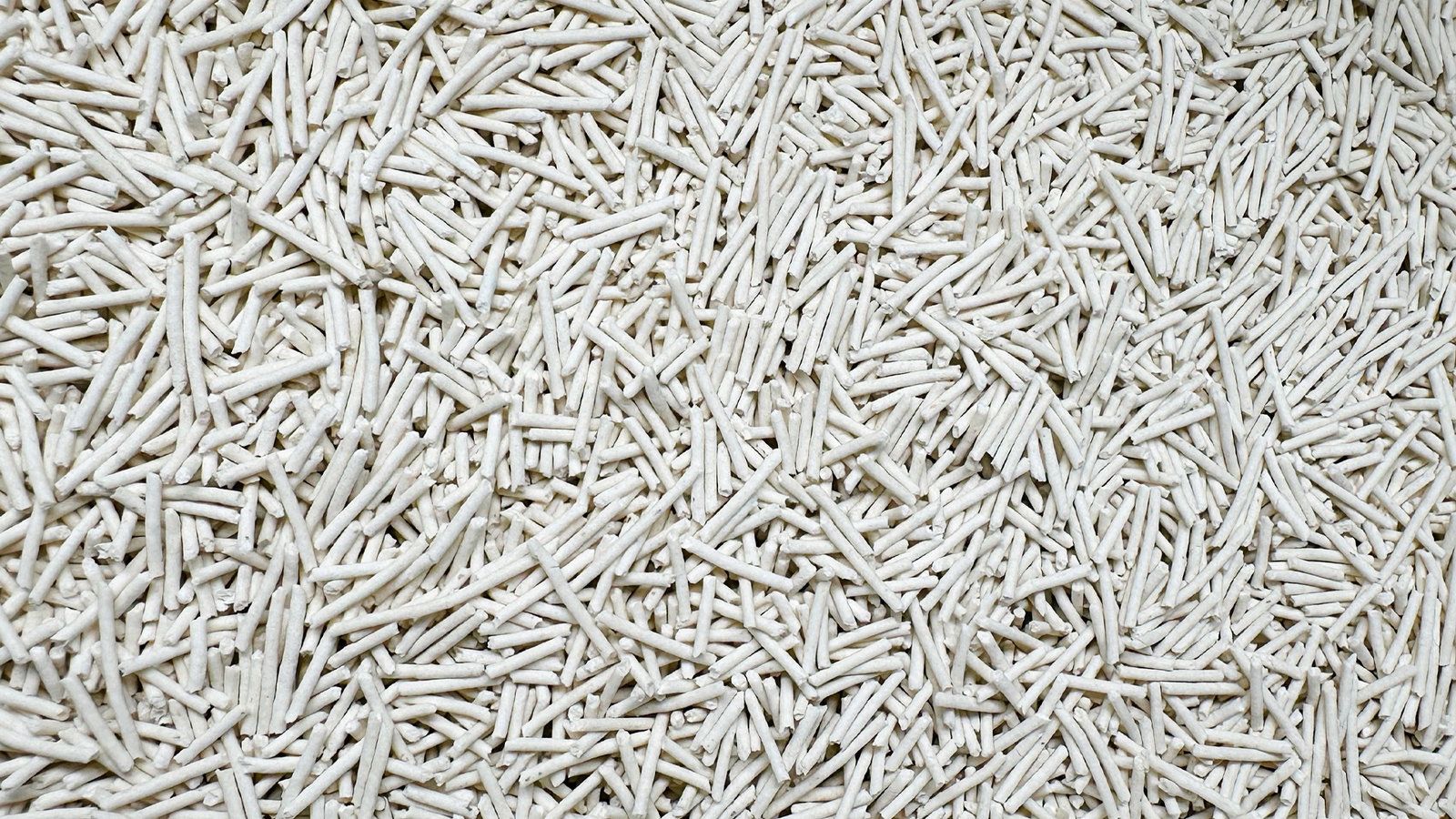
After drying and other finishing operations, pellets can contain a mixture of different sizes. Some may be too small, some may be oversized, and others may have broken into fragments during processing.
Sieving separates these particles by size, helping create a more uniform finished product before packaging. This is important because particle-size variation can affect dust, tracking, appearance, and the consistency of litter use.
A multi-layer vibrating sieve can separate the material into three main streams:
- Oversized particles: Larger pieces are removed for evaluation and, where appropriate, reprocessing.
- Target-size pellets: Particles that meet the product specification continue toward final inspection and packaging.
- Fine particles and dust: Undersized material is separated to help reduce loose fines in the finished bag.
The exact screen sizes and number of screening stages should be selected according to the product formula and required pellet specification.
Vibrating Sieving in Practice
The video below shows the vibrating screening process used to separate cat litter particles by size.
Particle Size, Dust, and Tracking
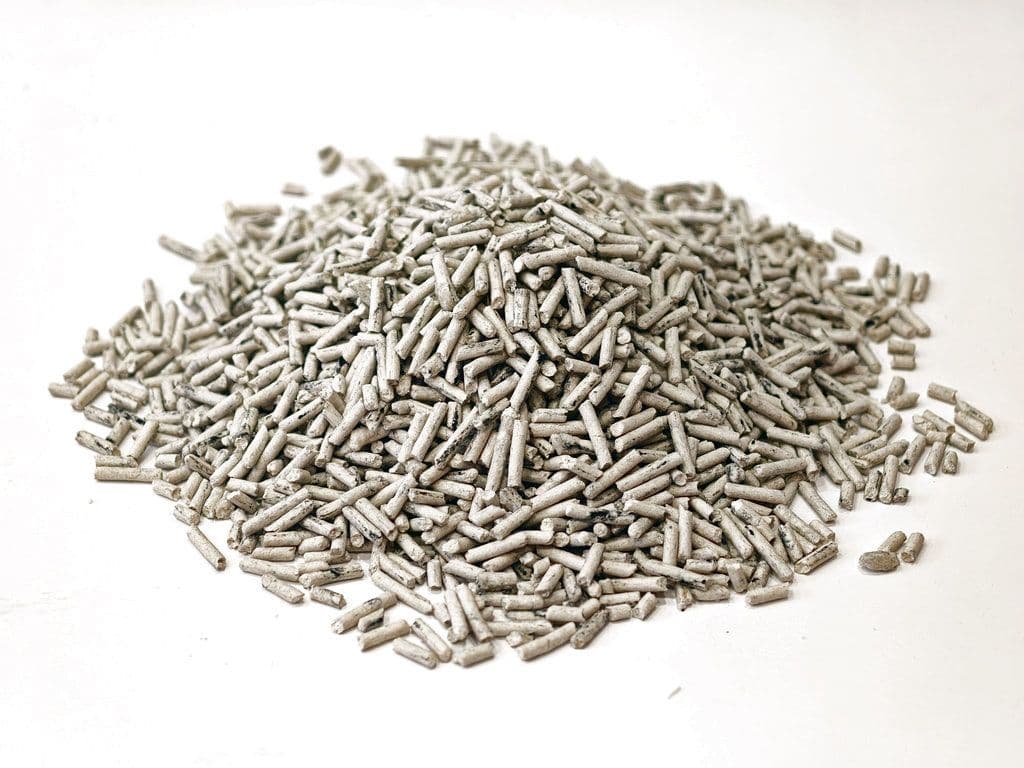
For the pellet specification 2mm, the target size is approximately 1.8–2.5 mm, with a focus on consistent pellet shape. Screening can also be used to remove particles below 1 mm and oversized pieces above 3 mm when those limits match the product specification.
| Sieving control | Quality-control purpose | Potential benefit |
|---|---|---|
| Remove fine particles below the specified limit | Reduce loose fines before packing | Less visible dust when pouring and handling |
| Screen out oversized particles | Limit irregular or unusually large pieces | A more consistent texture |
| Maintain a defined pellet-size range | Improve particle uniformity | More predictable litter handling and use |
A uniform particle profile can help reduce the amount of litter carried out of the box, although tracking also depends on pellet shape, surface texture, litter-box design, cat behavior, and the floor surface. It should not be attributed to particle size alone.
Similarly, sieving helps reduce the fine particles already present in the material, but it cannot prevent all dust from forming later. Pellets may still break during conveying, bag filling, shipping, or handling. This is why screening performance needs to be considered together with pellet strength and the condition of the product after transportation.
3. Why Drying and Sieving Need to Work Together
Drying and sieving are closely connected quality-control stages rather than independent operations.
Drying helps establish the moisture condition and physical strength of the pellets. Sieving then removes particles that fall outside the required size range. If pellets are too brittle, however, they may break after screening and generate new fines during later handling. If the product is not dried sufficiently, pellets may deform or behave inconsistently during subsequent processing.
A reliable process therefore considers the sequence as a whole:
- Drying: Bring the pellets to the specified moisture range without making them excessively brittle.
- Intermediate handling and finishing: Keep conveying conditions controlled to limit unnecessary pellet damage.
- Final sieving: Remove newly generated fines and particles outside the target size range.
- Pre-packing inspection: Check whether moisture, particle-size distribution, and appearance meet the batch requirements.
- Packaging: Protect the finished product from moisture changes and avoid unnecessary breakage during filling and handling.
4. What Cat Litter Buyers Should Check When Evaluating a Supplier
For bulk buyers and private-label brands, a sample inspection is part of supplier evaluation.
When assessing a cat litter manufacturer, buyers can check the details about the following quality-control points.
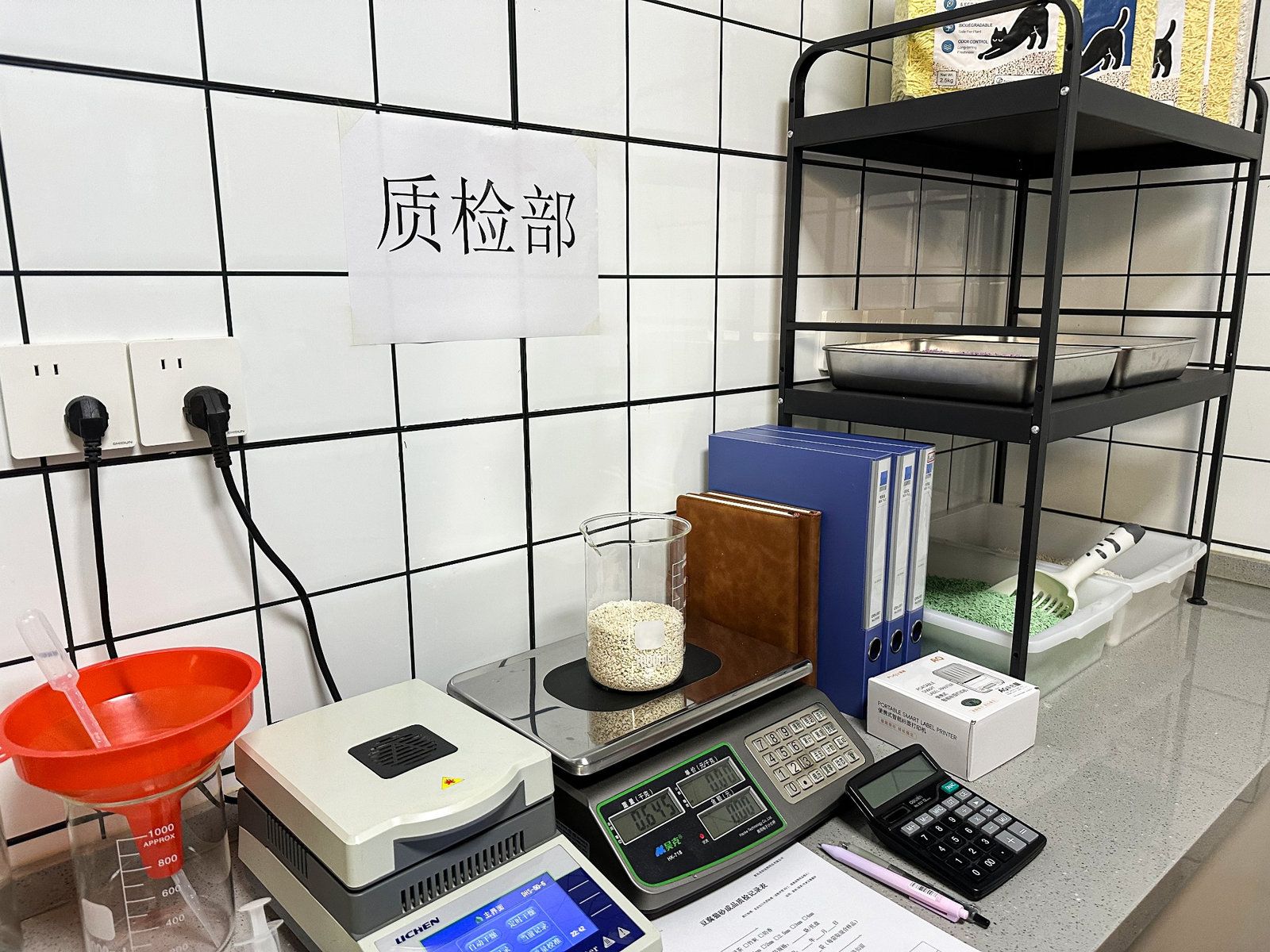
Moisture Testing
Particle-Size
Dust
Storage and Shipment Stability
5. Drying and Sieving as Part of a Complete Quality-Control System
Drying and sieving have a direct influence on the physical consistency of plant-based cat litter, but neither process should be evaluated in isolation. Raw-material consistency, formulation, pelletizing, finishing, packaging, and storage can all affect the final result.
For a closer look at how these steps fit into the wider manufacturing process, see the guide to tofu cat litter factory production and quality control.
For buyers comparing plant-based options, the product formula matters as well as the manufacturing process. Explore tofu cat litter specifications and product details to learn more about one type of plant-based litter.