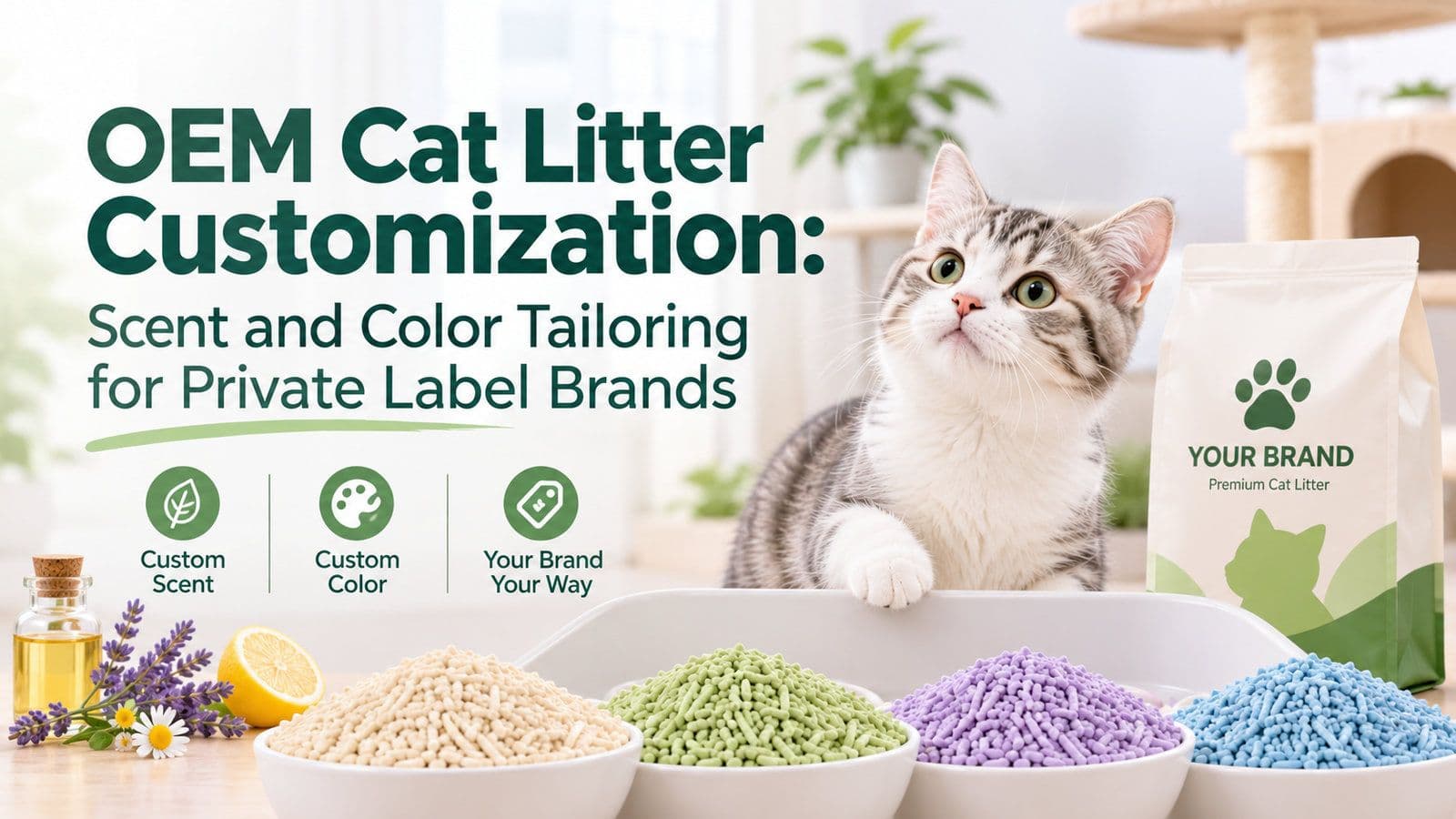
The global eco-friendly cat litter market is becoming increasingly competitive. For private label brands working with OEM manufacturers, scent and color customization offer practical ways to differentiate a product, strengthen brand identity, and respond to local consumer preferences.
Whether you are developing a tofu cat litter line, expanding a cassava litter collection, or refining a mixed formula, tailored fragrance and color can help turn a functional product into a recognizable part of your brand. This guide explains the available options, the quality considerations behind them, and the steps involved in developing a customized product.
Why Scent and Color Customization Matter
Scent and color may seem like cosmetic details, but they influence how customers experience and recognize a cat litter product.
Odor control is a key consideration for many cat owners. A suitable fragrance can contribute to a fresher litter-box experience when it is used alongside an effective deodorizing system. Preferences vary by market: some customers prefer familiar, clean scents such as fresh linen or baby powder, while others may favor subtle, natural profiles such as green tea or fragrance-free products.
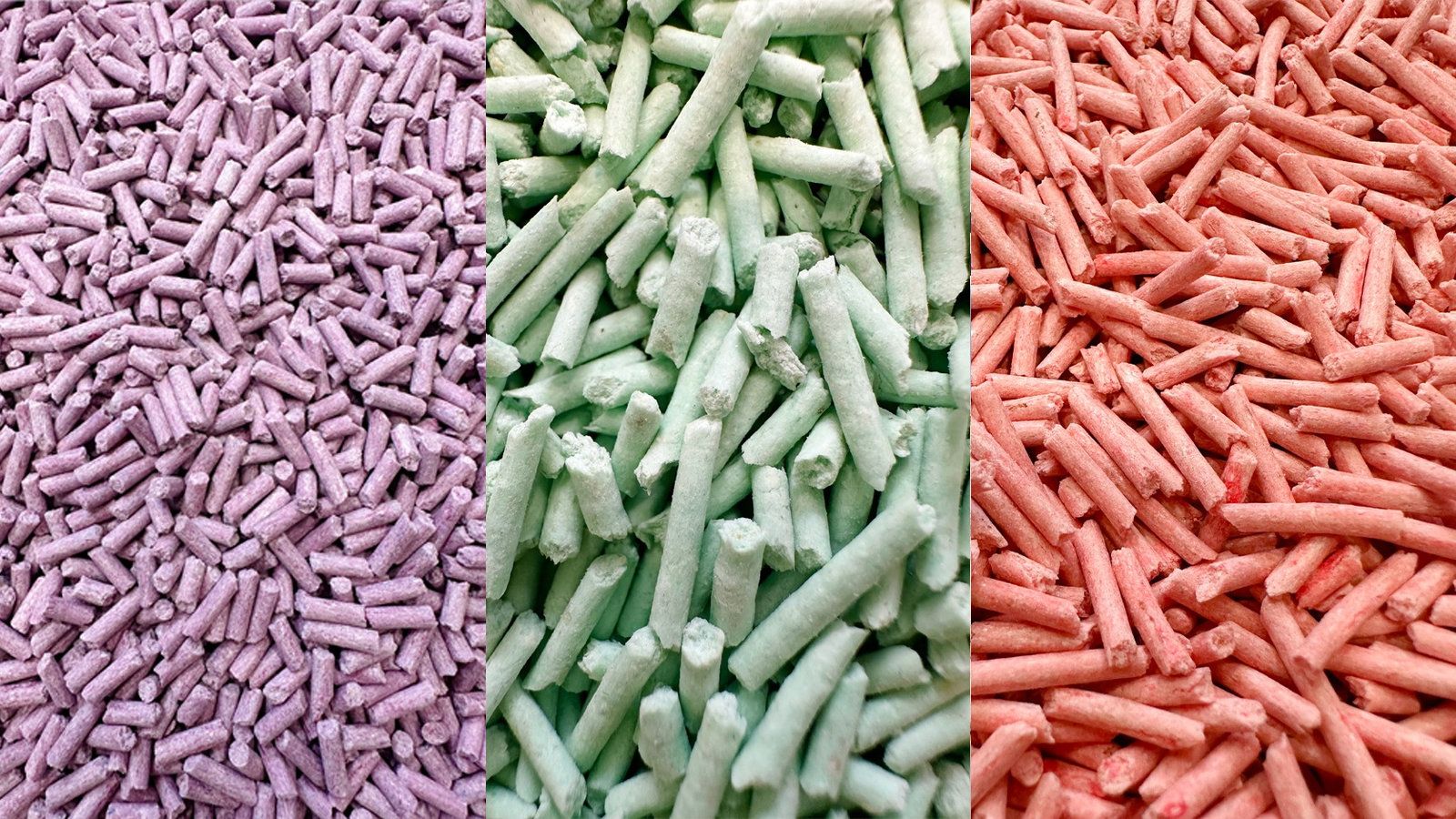
Color gives brands a way to build a distinctive product range. A consistent signature shade can make a product easier to recognize, while different colors can help separate product variants—for example, green for a fresh or plant-themed range, purple for a lavender-scented option, and natural beige for an unscented product.
Most importantly, customized products need to remain consistent from batch to batch. A recognizable scent and uniform color help create a predictable customer experience and support long-term brand trust.
Custom Scented Cat Litter: Options, Technology and Safety
Fragrance customization involves more than adding a pleasant smell. The scent profile should suit the target market, remain balanced during storage and transport, and work alongside the product's deodorizing function. It should not be so strong that it overwhelms cats or their owners.
Popular Fragrance Profiles for Global Markets
The following options illustrate common scent directions for private label cat litter projects. The best choice depends on the target market, product formula, and customer preferences.
| Fragrance profile | Core characteristics | Potential target markets | Scent intensity |
|---|---|---|---|
| Fresh Linen | Clean, neutral and household-friendly | Europe and North America | Light to medium |
| Green Tea | Fresh, earthy and subtle | Asia-Pacific and the Middle East | Light |
| Lavender | Soft floral profile | Europe and Oceania | Medium |
| Baby Powder | Gentle and familiar | North America and Latin America | Light to medium |
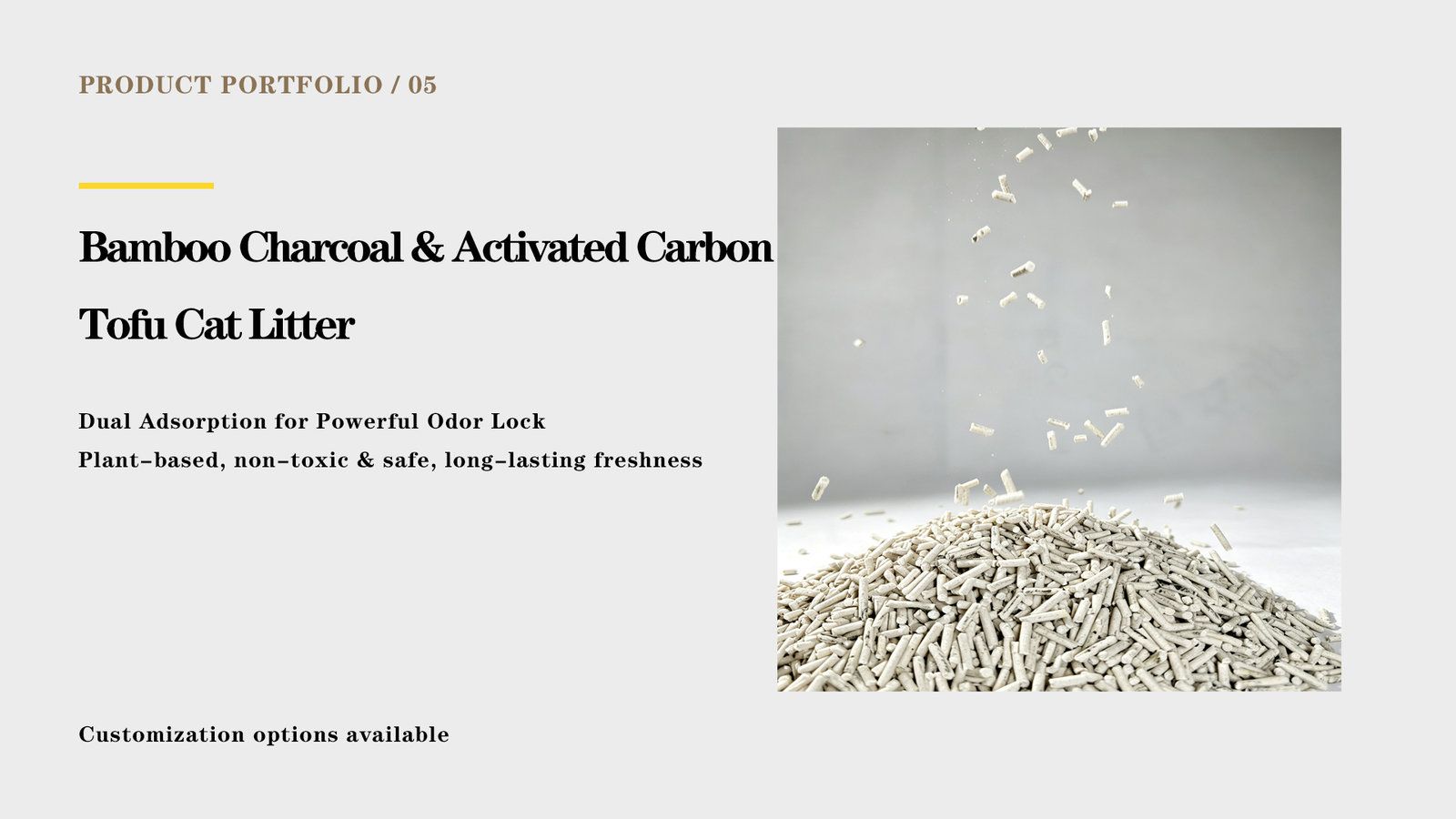
| Bamboo Charcoal / Activated Carbon | Odor-adsorption focused; available as an unscented option | Broad markets, including customers who prefer unscented products | None for the unscented option |
| Original Unscented | Plant-based product profile without added fragrance | Customers seeking a fragrance-free option | None |
Quality and Safety Considerations
A custom fragrance should complement—not replace—the litter's odor-control system. The formulation and fragrance level should be evaluated together, and the finished product should be checked for consistent fragrance distribution.
Sunbow Pet manufactured cat litter deodorizing ingredients as plant-derived and its core deodorization system has been SGS-verified for ammonia-odor reduction within five minutes of soiling.
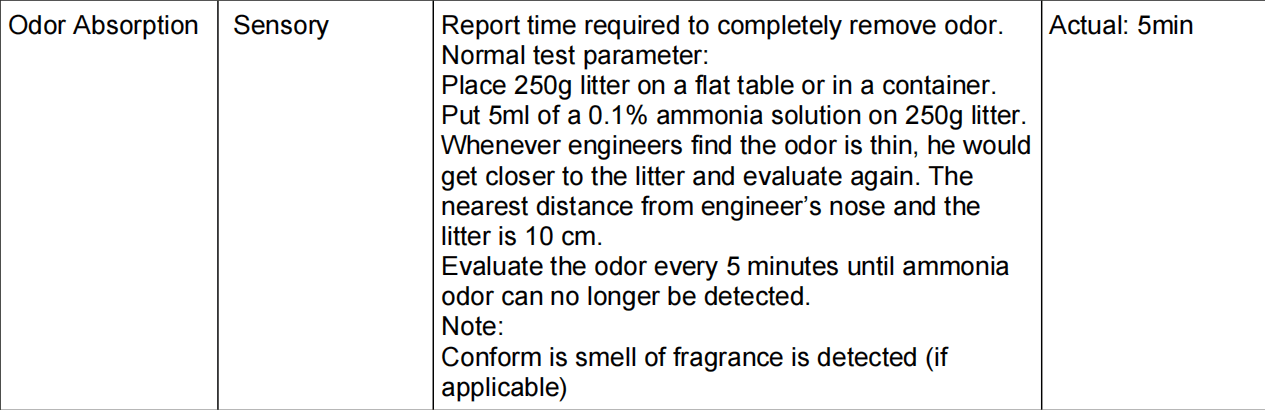
if you need the full report, please contact by via Email or WhatsApp
Custom Colored Cat Litter: Visual Branding and Performance
Color customization helps align a cat litter product with a brand's visual identity. However, appearance should never come at the expense of product performance. A well-developed colored litter should have even pigment distribution and retain its expected clumping and moisture-handling properties.
Available Color Series and Use Cases
The following color directions can be considered when planning a plant-based cat litter range.
| Color series | Common shades | Ideal brand positioning | Compatible litter types |
|---|---|---|---|
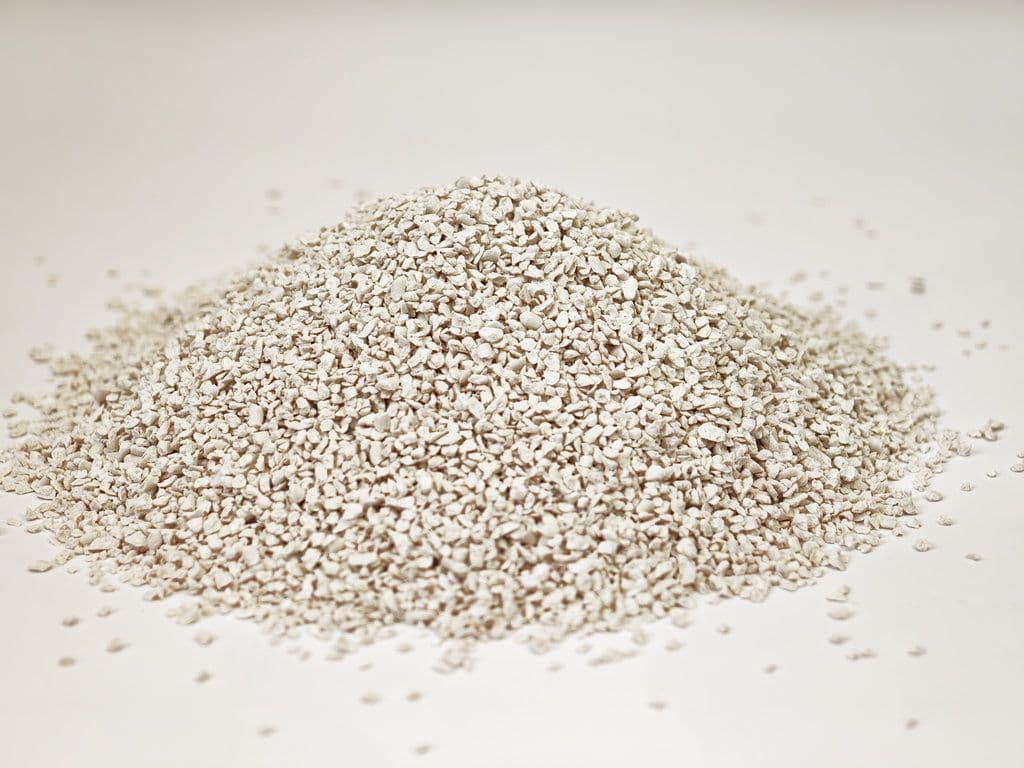
| Natural Original | Light beige, pale yellow | Natural and eco-friendly positioning | Tofu, cassava and mixed litter |
| Fresh Green | Matcha, aloe vera | Fresh, plant-based or deodorizing themes | Tofu and mixed litter |
| Calm Purple | Soft lavender, lilac | Fragrance-themed or premium calming lines | Tofu litter |
| Soft Pink | Sakura, peach | Lifestyle-focused brand ranges | Tofu and cassava litter |
| Charcoal Grey | Deep grey, black or speckled grey | Activated-carbon or deodorizing product lines | Mixed and bentonite-blend litter |
Color Consistency and Product Performance
According to the supplied product information, colorants are mixed into the raw material before pellet extrusion. This approach is intended to distribute color throughout the pellets rather than leave pigment only on the surface.
The manufacturer's stated quality checks include:
- Wet-color stability: transparent-bowl clumping tests over a seven-day period are used to check for color bleeding.
- Dust control: the factory describes a pre-polishing process intended to reduce loose surface dust.
- Clumping performance: customized colors are expected to retain the product's normal clumping behavior and resist sticking to the litter-box bottom.
- Pellet consistency: the supplied specification lists symmetric pellets in the 2.0–2.5 mm range.
For a private label order, request samples in the final color and formula. Test them under consistent conditions and agree on acceptance criteria before mass production.
The OEM Customization Process: From Idea to Shipped Product
A scent and color customization project usually moves through several stages. Confirm the specifications and approval points with the manufacturer before production begins.
-
Inquiry and requirement alignment. Share the base litter type—such as tofu, cassava or a mixed formula—along with your target scent, color, packaging preferences, destination market and estimated order volume. If you are unsure which option is suitable, discuss the intended positioning and customer profile with the manufacturer.
-
Sample development and confirmation. Request samples of the proposed formula, scent and color. The supplied factory information states that custom formula prototypes can generally be prepared in around seven days. Evaluate the sample for scent strength, color appearance, clumping, dust and other performance requirements before approval.
-
Quotation and specifications. Confirm the product formula, packaging format, order quantity, unit price, MOQ, lead time, payment terms and shipping terms. The supplier's stated quotation arrangement is based on FOB Qingdao; confirm the final terms in the quotation and purchase documents.
-
Order confirmation and artwork approval. After the sample and commercial details are approved, confirm the product specification and packaging artwork in writing. Check product name, net weight, language, claims, barcode and importer information before printing.
-
Mass production and quality checks. Confirm the production schedule and the checks that will be carried out during and after production. For customized products, this may include checks for color and fragrance consistency, pellet appearance, clumping performance and packaging condition. Ask whether a pre-shipment video review or independent inspection can be arranged.
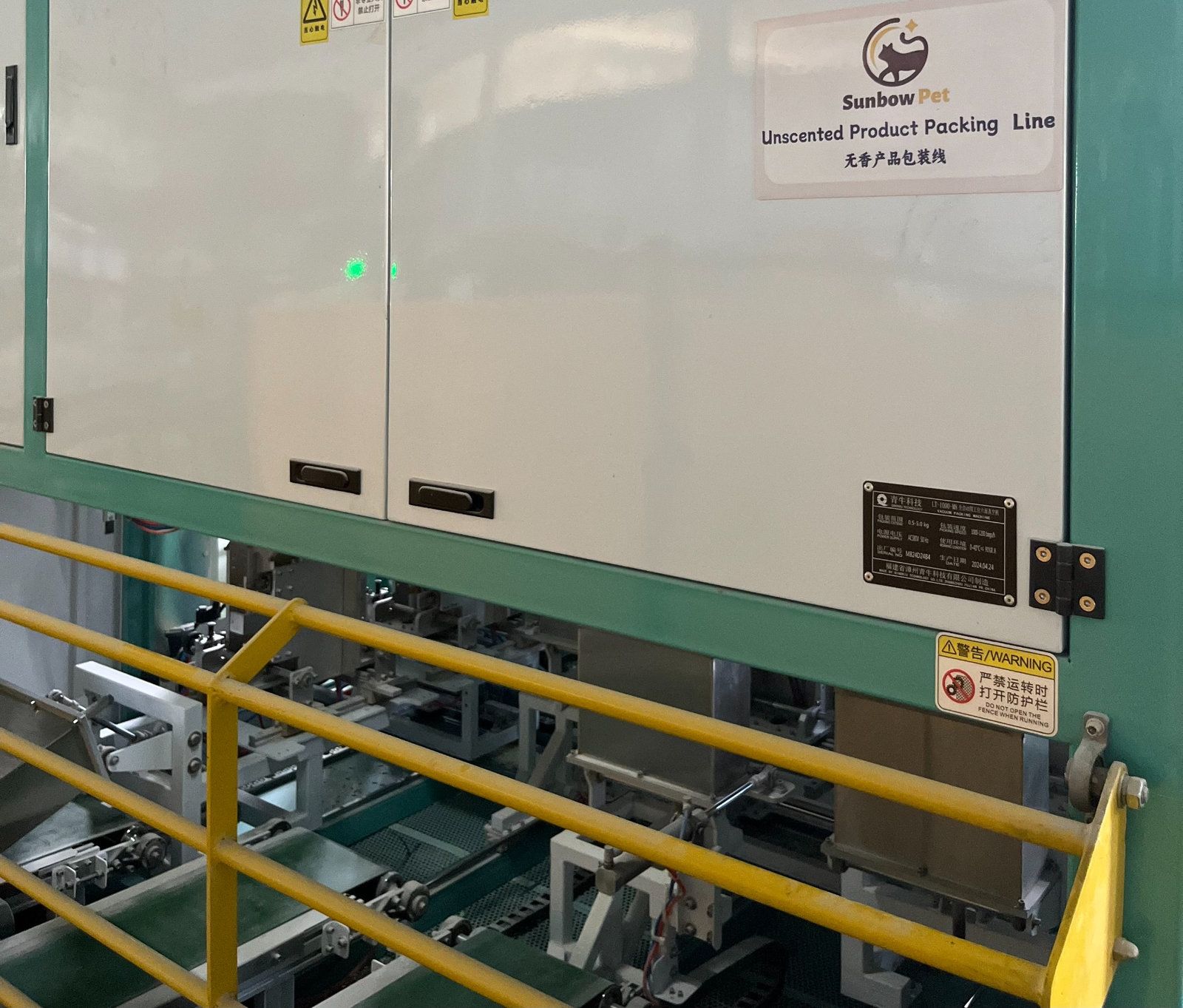
The factory has a designated unscented product packaging line, as shown below. Buyers can confirm which packaging line and process will be used for their selected product.
-
Shipping and document handover. Confirm the container type, loading plan, shipping marks, booking responsibility and export documents before dispatch. The supplied factory information lists 20'GP and 40'FCL container options from Qingdao under FOB terms. The buyer may arrange ocean freight directly or discuss logistics coordination with the manufacturer.
What You Gain with a Factory-Direct Custom Cat Litter Partner
Working directly with a specialized cat litter manufacturer can make it easier to coordinate product development, packaging and production.
Sunbow Pet began operations in 2023 and focuses on plant-based cat litter. The company-provided profile lists an annual production capacity of 68,000 tons and exports to partners in more than 40 countries. Its supplied materials also describe SGS-audited production lines and support for both existing products and OEM/ODM projects.
For brands considering a custom scent or color range, a factory-direct arrangement can offer several practical benefits:
- Product options: discuss scent, color, base formula and packaging requirements with the manufacturer.
- Development support: request samples and evaluate the proposed product before confirming an order.
- Production coordination: align product specifications, packaging artwork and production planning with one manufacturing partner.
- Repeat-order consistency: agree on reference samples and quality criteria to help maintain consistency across batches.
- Export coordination: clarify which shipping documents and logistics arrangements the factory can support.
You can learn more about the company's OEM/ODM process and its manufacturing background on the Sunbow Pet About page.
Frequently Asked Questions
What is the minimum order quantity for custom scented or colored cat litter?
The supplied factory information states that MOQ for many standard tofu and cassava customization projects starts from 1 ton. The actual MOQ may vary according to the formula, number of colors or scents, packaging material and order configuration. Confirm the MOQ for each SKU before placing an order.
Can packaging be customized along with scent and color?
Yes. The supplied factory information describes OEM/ODM support for custom packaging and label design. Packaging materials and structures should be selected according to the product, filling process, shipping conditions and destination-market requirements. Review the classic dust-free tofu cat litter product as one example of the product range.
How long does custom sample development take?
The supplied factory information states that most custom formula prototypes can be prepared in around seven days. Confirm the schedule for your specific formula and whether sample shipping time is additional.
Final Thoughts
Scent and color are useful ways to give a private label cat litter range a more distinctive identity. The best customization projects start with a clear understanding of the target market, followed by sample evaluation and written quality requirements.
Before moving into mass production, confirm the formula, scent level, color standard, packaging artwork, MOQ and inspection arrangements. With clear specifications and a reliable manufacturing partner, brands can develop a product range that reflects their positioning while maintaining the performance customers expect from cat litter.